carson.zyli.cz 11 case files

Carson Zylicz: The Plans

Eleven case files. Ten businesses and the person accountable for them. Swipe for the plans. The thesis they came out of is underneath.

1 / 11
CASE #000
Carson Zylicz ZYLI Portfolio Manager Carson Zylicz Freedom fighter
screens all five, eventually
on file 10 positions
what this is the file covers all 10
why it is in the book I run this book. Ten names, no index, no committee, so every line below is a decision I have to defend in public and re-underwrite in private.

The Plan:

The Man With Ten Plans

The problemI own ten companies and nobody has asked me why.

  1. 1Invest in 10 businesses, one at a time
  2. 2Write a plan for each of them, in pen
  3. 3Publish the plans so I cannot quietly move the goalposts

Why it worksA thesis you have written down is a thesis you can be wrong about, in public, on paper, forever.

Estimated startup costOne pen

Accountable, in writing, on paper.

CASE #001
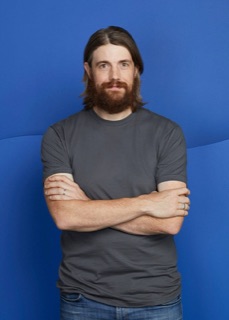
Tony Xu DASH DoorDash Tony Xu Operational Grinder
screens hit
last price $193.62 +0.96%
market cap $83.9B 5Y return -0.6%
why it is in the book Local density is the moat: the more couriers and merchants on a block, the faster and cheaper delivery gets, and the worse the second entrant's unit economics look.

The Plan:

The Burrito Relay

The problemDelivery is expensive because a car has to move, and a car is the most expensive ingredient in a burrito.

  1. 1Hire every resident on the block to stand in their doorway with both arms out
  2. 2Pass the burrito down the street like a bucket at a fire
  3. 3Pay each person one dollar, or one bite, whichever they prefer

Why it worksThe more people on the block, the shorter each arm has to reach, and the faster the burrito travels. No competitor can hire your neighbours twice, because by then they will be tired.

Estimated startup cost40 neighbours and one burrito

Nobody drives. Everybody delivers.

CASE #002
Mike Cannon-Brookes TEAM Atlassian Mike Cannon-Brookes Ecosystem Architect
screens hit
last price $193.98 -1.36%
market cap $49.1B 5Y return -57.7%
why it is in the book Jira and Confluence are the enterprise mainframe of work tracking: cheap per seat, brutally expensive to migrate, with a partner marketplace settled on top.

The Plan:

The Infinite Ticket

The problemNobody knows what work is happening, including the people doing the work.

  1. 1Turn every task into a ticket, including the task of making tickets
  2. 2Have every ticket create two more tickets
  3. 3Promote whoever stops asking what the tickets mean

Why it worksThe system gets more valuable the more it is used, and leaving means explaining the tickets to a new system, which nobody alive is able to do.

Estimated startup costOne ticket, then nothing forever

Cheap per seat. Priceless to escape.

CASE #003
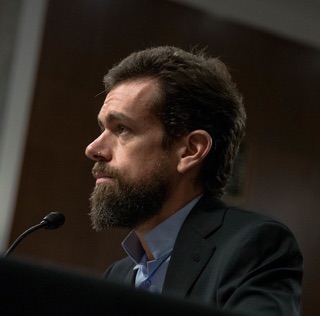
Jack Dorsey XYZ Block Jack Dorsey Ecosystem Architect
screens hit
last price $76.54 +0.41%
market cap $46.0B 5Y return -69.9%
why it is in the book Cash App turned a peer-to-peer wedge into a consumer network, while Square's seller base gives the same company both sides of the payment flow.

The Plan:

The Dollar Handshake

The problemNobody wants a bank account until they owe a friend five dollars.

  1. 1Put a cash machine on the sidewalk that only pays out when two strangers are touching the same dollar
  2. 2Hire a notary to referee every handshake
  3. 3Open an account for both of them before they let go

Why it worksOne dollar gets you two customers, and every argument about who let go first becomes a support ticket you can charge for later.

Estimated startup costOne dollar, reused indefinitely

One dollar. Two customers.

CASE #004
Olivier Pomel DDOG Datadog Olivier Pomel Algorithmic Engine
screens hit
last price $278.24 +0.66%
market cap $99.9B 5Y return +66.6%
why it is in the book Observability is the system of record for production. Once every service reports into one pane of glass, replacement means re-instrumenting the entire stack.

The Plan:

The One Window

The problemEngineers cannot see what is broken until a customer phones to tell them.

  1. 1Put every server in one room behind one very large window
  2. 2Make the window load-bearing
  3. 3Sell the engineers binoculars, then sell them a second window to watch the first window

Why it worksOnce every machine reports into one pane of glass, removing the glass means rewiring the building, and nobody has ever rewired a building to save money.

Estimated startup costOne window and a structural engineer

One window. Load-bearing.

CASE #005
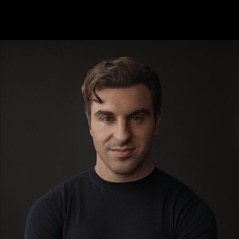
Brian Chesky ABNB Airbnb Brian Chesky Ruthless Aggregator
screens hit
last price $160.39 -2.24%
market cap $94.6B 5Y return -6.0%
why it is in the book A two-sided network where the supply is homes and the switching cost is reputation: nobody gets to re-earn a host's review history somewhere else.

The Plan:

The Reputation Hotel

The problemHotels own buildings, and buildings are expensive.

  1. 1Do not buy a single room
  2. 2Rent out strangers' bedrooms and let them keep the furniture
  3. 3Keep every guest review at the front desk forever, in a locked drawer

Why it worksGuests can leave whenever they like. Nobody leaves four hundred reviews behind, because the drawer is locked, and the drawer is the entire hotel.

Estimated startup costOne drawer

No rooms. All reviews.

CASE #006
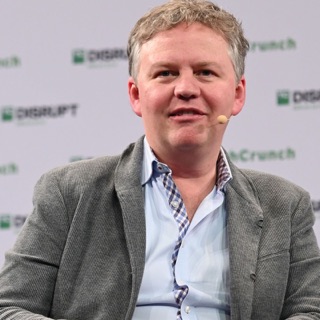
Matthew Prince NET Cloudflare Matthew Prince Ecosystem Architect
screens hit
last price $355.01 -1.25%
market cap $126.4B 5Y return +82.3%
why it is in the book Sits in front of a huge share of the internet, so it sees traffic nobody else sees, and Workers plus Zero Trust turn ripping it out into a re-architecture, not a vendor swap.

The Plan:

The Traffic Cop

The problemEvery website on earth is getting attacked and none of them can see it coming.

  1. 1Stand at the front door of the internet and offer free parking
  2. 2Ask every car for its license plate, plus a small non-refundable deposit
  3. 3Write every plate in a notebook and never throw the notebook away

Why it worksOnce you have seen every license plate, you know who is speeding before they speed. And no city can remove you without removing the road you are standing on.

Estimated startup costOne notebook, eventually several

Free parking. Permanent records.

CASE #007
Luis von Ahn DUOL Duolingo Luis von Ahn Algorithmic Engine
screens hit
last price $148.13 +0.70%
market cap $6.9B 5Y return -14.7%
why it is in the book A daily habit loop that manufactures its own training data: difficulty, content and retention all get tuned by the same flywheel that keeps users coming back.

The Plan:

The Owl That Never Sleeps

The problemPeople quit learning languages, and people handle guilt very poorly.

  1. 1Build a daily habit loop and assign every user their own personal owl
  2. 2Teach the owl which specific notification makes that particular person feel worst
  3. 3Have the owl remember what made them quit, so it is ready next time

Why it worksEvery lesson trains the product on how to keep you. The product gets smarter the guiltier you feel, which means it gets smarter every night at eleven.

Estimated startup costOne owl, copied five hundred million times

Five hundred million owls. All watching.

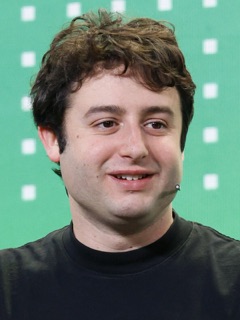
CASE #008
Dylan Field FIG Figma Dylan Field Ecosystem Architect
screens hit
last price $21.93 -0.36%
market cap $11.7B Since IPO return -68.8%
why it is in the book The design file is where the work actually lives. Multiplayer editing plus a shared component library means switching cost is measured in team-wide rework.

The Plan:

The Shared Cursor

The problemDesigners keep leaving, and when they leave they take the files with them.

  1. 1Put the entire company inside one file
  2. 2Require two people to be present before anything can be changed
  3. 3Show everyone's cursor at all times, including at weekends

Why it worksOnce the file is the workspace, leaving means redoing the work in front of everybody. Nobody quits in front of everybody.

Estimated startup costTwo designers and no privacy

One file to rule the design team.

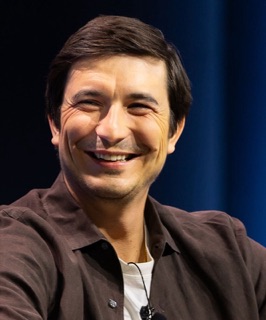
CASE #009
Vlad Tenev HOOD Robinhood Vlad Tenev Ruthless Aggregator
screens hit
last price $112.00 -1.85%
market cap $100.7B 5Y return +220%
why it is in the book Distribution first. Zero-commission trading pulled a generation onto one app, and the roadmap is bundling every adjacent financial product into it at zero marginal price.

The Plan:

The Free Sample Share

The problemBrokerages charge money, and people hate paying money.

  1. 1Hand out one free share on the sidewalk to anyone who makes eye contact
  2. 2Make selling it a two week process that begins with a phone call
  3. 3Send forty notifications a day, plus one at 3am about a stock they do not own

Why it worksNinety percent of people who take a free sample buy something. The other ten percent become customers anyway when the 3am notification wakes them up.

Estimated startup costOne share, handed back and forth all day

Free to start. Impossible to stop checking.

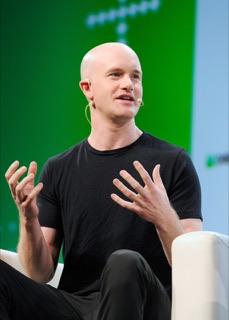
CASE #010
Brian Armstrong COIN Coinbase Brian Armstrong Operational Grinder
screens hit
last price $185.74 -1.32%
market cap $49.0B 5Y return -41.9%
why it is in the book Wins the unglamorous half: licences, custody, compliance and cold storage. That regulatory surface is the barrier, and the assets custodied are the switching cost.

The Plan:

The Vault With Paperwork

The problemCrypto is unregulated, and customers are, reasonably, nervous.

  1. 1Read the entire rulebook out loud to a regulator
  2. 2Collect a licence from every government that has one, and three that do not
  3. 3Build a vault that needs forty forms and two signatures to open, then lose one form

Why it worksDoing the boring, expensive, regulated part keeps everybody else out. The assets in the vault are the switching cost, and so is the missing form.

Estimated startup costEleven lawyers and a filing cabinet

Boring is the moat.

Swipe, scroll, or use the arrow keys.

The five screens

Every position has to clear the left side of at least two of these. The right side is what disqualifies. Click a screen to see which files hit it.

When two screens stack

Four founder archetypes

Structural moats show up as a personality before they show up in a spreadsheet.

  • The Ecosystem Architect

    The Steve Jobs

    Rejects fragmentation. Obsesses over vertical integration by controlling both the physical hardware and the proprietary software, to create a frictionless, closed-loop user experience that is incredibly difficult for competitors to penetrate.

  • The Ruthless Aggregator

    The Bill Gates / Zuckerberg

    Prioritises distribution above all else. Builds a massive user network with a wedge product, then aggressively clones, bundles, and drops the price of adjacent tools to zero, turning stand-alone competitors into mere platform features.

  • The Operational Grinder

    The Jeff Bezos

    Attacks brutal, low-margin, real-world logistics or regulatory problems. Wins through sheer density and high operating leverage, building a moat out of capital-intensive physical infrastructure that pure software companies are afraid to touch.

  • The Algorithmic Engine

    The Larry & Sergey

    Solves massive, messy human problems through pure engineering and proprietary data loops. Originates from deep technical backgrounds and relies on algorithmic superiority, where the product inherently gets smarter with every interaction, rather than on subjective design.

  • Spend ruleManagement must spend on product over marketing.
  • MissionOwn the product-led builders, avoid the story-led spenders.

Post-mortem rules

Written before the position, so the exit is not a negotiation with myself.

  1. 1Don't invest in a CEO that doesn't have good experience.
  2. 2Marketing masks product friction.
  3. 3Trust is a short-term moat.
  4. 4Distribution beats features.
  5. 5The middleman gets squeezed.
  6. 6Populist hate leads to regulation.
  7. 7Early founder exit is an early warning.
  8. 8Freedom fighters, mercenaries, conscripts. Know which one you backed.
“A truly great business must have an enduring moat that protects excellent returns on invested capital.”
Warren Buffett, 2007 Berkshire Hathaway shareholder letter
Warren Buffett, according to the internet

“Freak the fuck out and panic sell everything right now. It's fucking over.”

Fabricated. He never said it. It is a meme from Reddit that keeps getting reposted as real.